
The Next Step
The Opportunity She Almost Never Had
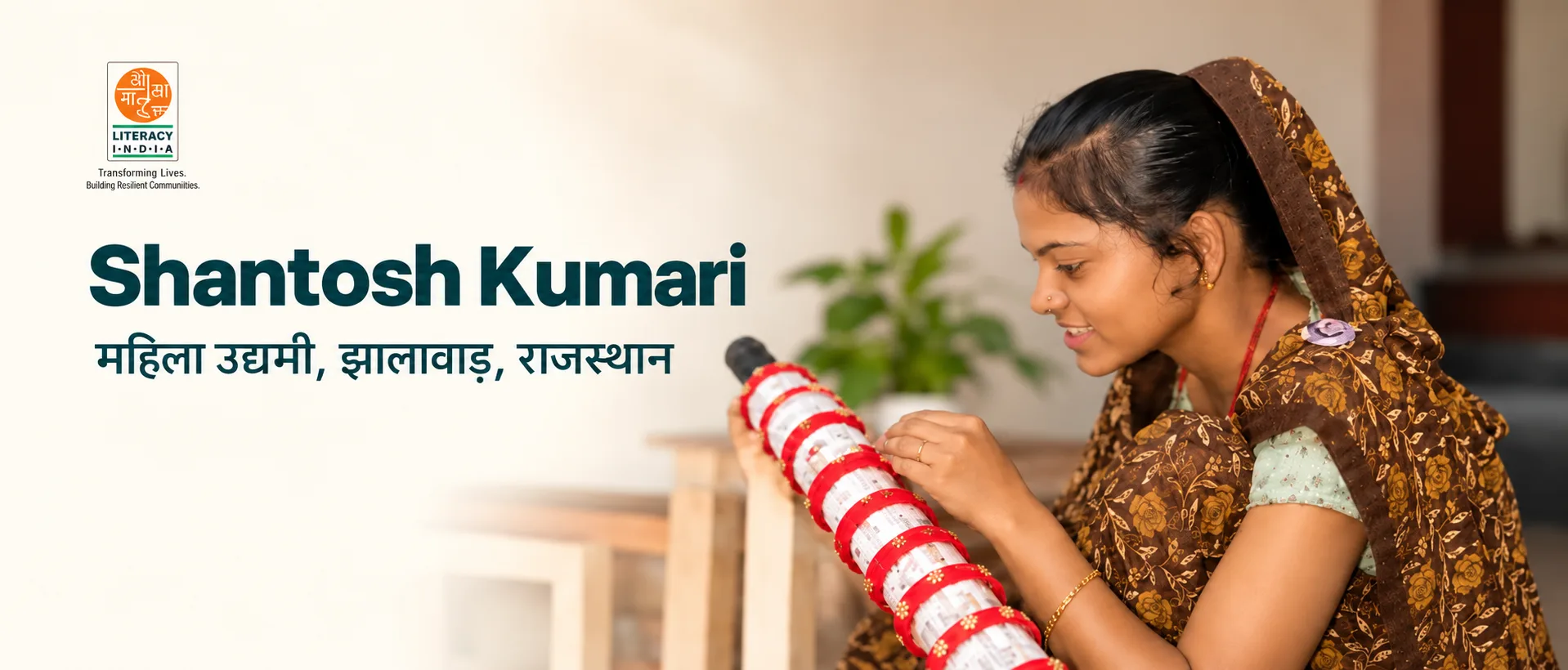
One place in a training programme became an opening for Shantosh Kumari to try something she had never imagined: building a business of her own.
Shantosh Kumari did not set out looking for a business idea. She came across an opportunity, recognised that it might lead somewhere, and decided not to let it pass.
At 22, a Class 12 graduate from Khuri village in Rajasthan’s Manoharthana block, Shantosh had imagined that life after marriage would largely revolve around household responsibilities. Entrepreneurship was not yet part of her story.Then, quite unexpectedly, she heard about a jewellery-making training programme.
Literacy India, under the PNB Skill Training Programme, was organising a 14-day artificial jewellery-making course in Patan, Jhalawar, for young women. One selected participant could not join because of documentation issues. Shantosh learnt about the vacant seat through a relative who was attending the training.She could have let the information pass. Instead, she enrolled.
Over the next fourteen days, she learnt the basics of making artificial jewellery. On completing the programme, she received essential tools and further guidance from Literacy India to help her put her new skills to use.The next step was hers to take.
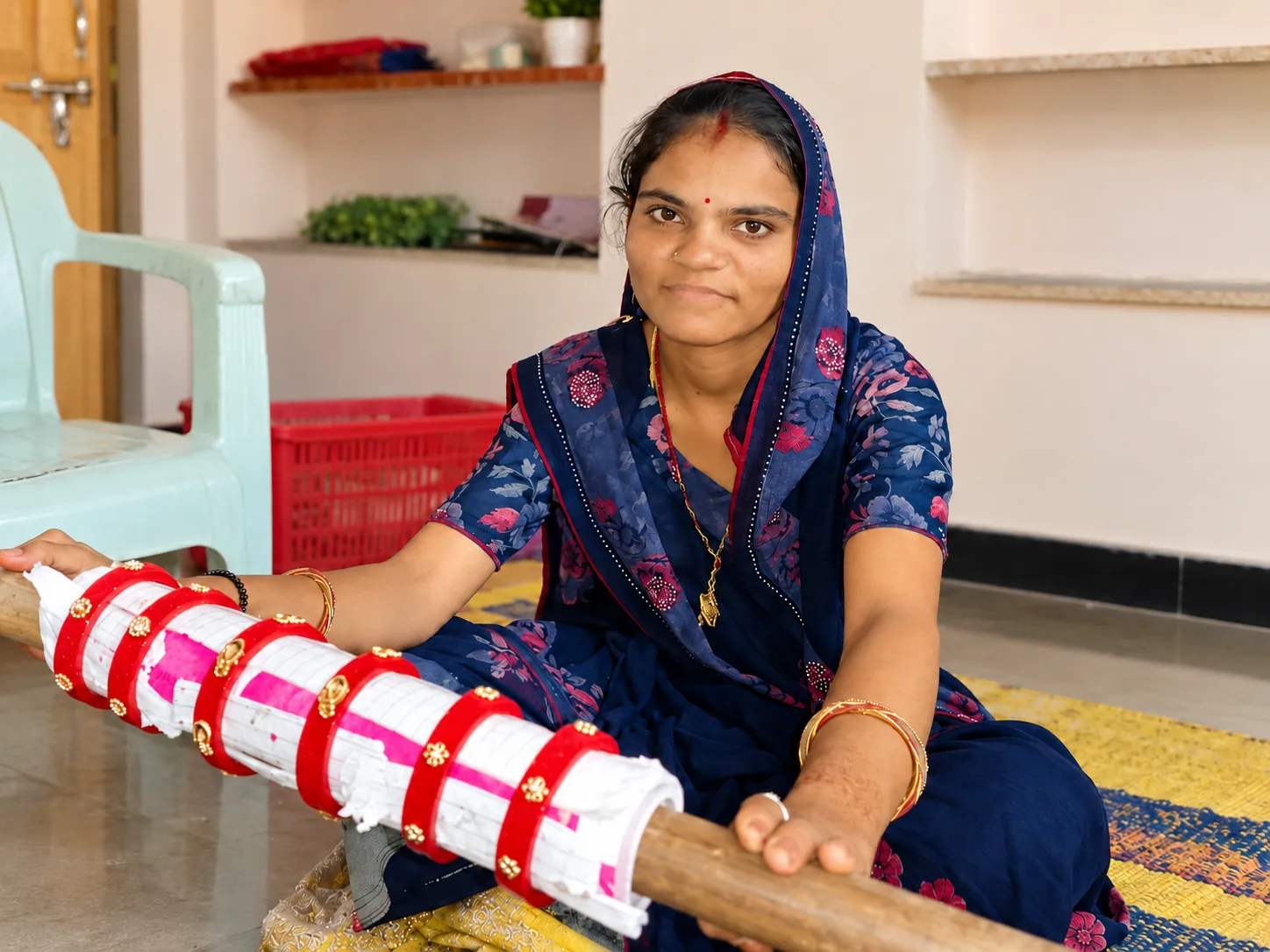
Shantosh began making jewellery at home and looking for customers. She started supplying products wholesale to PNB Mart and selling directly to other buyers.
In the last month reported, she invested around ₹1,200 in raw materials and generated sales of approximately ₹3,500.
These are early numbers, and a young business has a long way to go before it becomes a reliable source of income. But behind those numbers is a change worth noticing. Shantosh is beginning to learn what it takes to turn a skill into an enterprise: making products, finding buyers and understanding the market.
Her business is still small. Her ambition need not be.
She hopes to expand her work and increase her earnings. For now, she has something valuable to build on: a practical skill, the means to use it and the experience of making her first sales.
Sometimes, an opportunity arrives without much announcement. A place becomes available. Someone passes on the information. A young woman makes a decision.
What follows depends on what she does with it.Shantosh chose to begin. And that is how her business story started.
The First Salary Changes More Than a Bank Balance
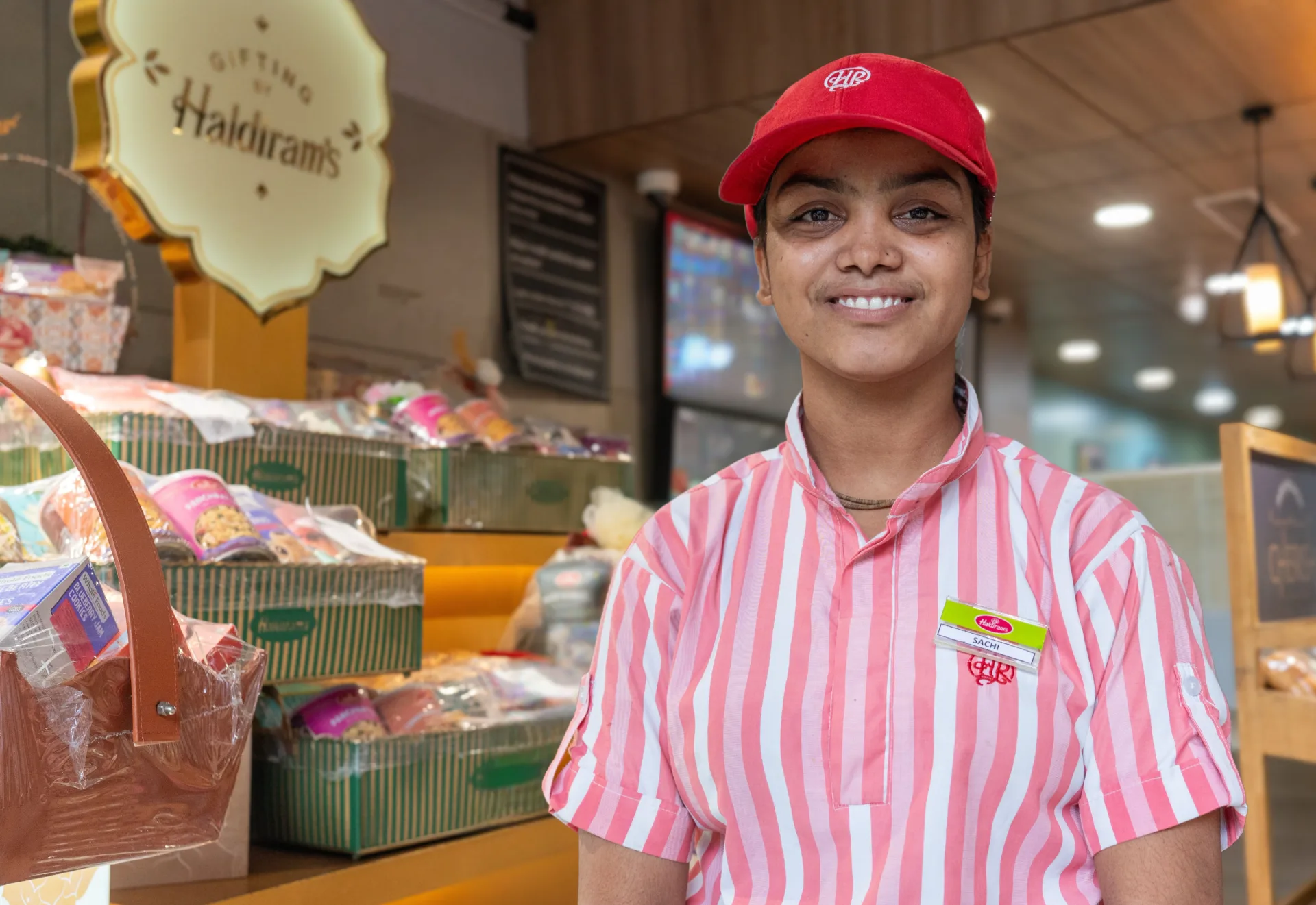
For Sachi, a job paying ₹17,000 a month means something far greater than a salary. It means she can now help support the family that has always supported her.
A family of six. A father who pulls a rickshaw. A mother who works in other people’s homes. And a young woman who has begun to see a future in which she, too, can contribute.
For Sachi, that future once seemed some distance away.
Her family had moved from Farrukhabad in Uttar Pradesh in search of better livelihood opportunities and education for their children. After completing Class 12, Sachi joined Literacy India’s Noida centre, hoping to learn computer skills and find a way to earn.
She was keen to learn. But knowing how to work on a computer and feeling ready to enter a professional workplace are two different things. Basic English communication was a challenge, and her confidence needed time to catch up with her aspirations.
She began with computer operations and MS Excel. Then came a visit to Haldiram Skill Academy through Literacy India’s Pragati career-awareness programme. Sometimes, seeing a workplace and the opportunities it offers can change the questions a young person asks about her future.
Sachi began to look beyond the path she had first imagined.
Her Career Instructor recognised that she might benefit from a different, more practical route into employment and counselled her to consider multicuisine training. It was a new direction, and Sachi decided to give it her best.
Three months of training later, she secured a job at a Haldiram outlet at Skymark Tower, Sector 98, Noida. Her monthly salary: ₹17,000.
For a family in which both parents have been working to meet household needs, this is a meaningful addition to the family income. Sachi is no longer only preparing herself for the world of work. She is now contributing to the home she comes from.
“I never imagined that such job opportunities would be available to me after training. I am very happy. This is not just a job for me; it is a matter of pride. Now, I am able to support my parents financially, and they are very happy too,” she says.
There is something quietly powerful about that last thought. Sachi is proud of her job, but she is equally happy about what her earnings mean to her parents.
Her journey also reminds us that young people do not always follow a straight line from training to employment. Sometimes, they need someone to recognise their potential, help them explore another option and encourage them to take it.
Sachi has found her first foothold in the professional world. And with it, she has found a new way to stand beside her family.
A Little More Room to Breathe
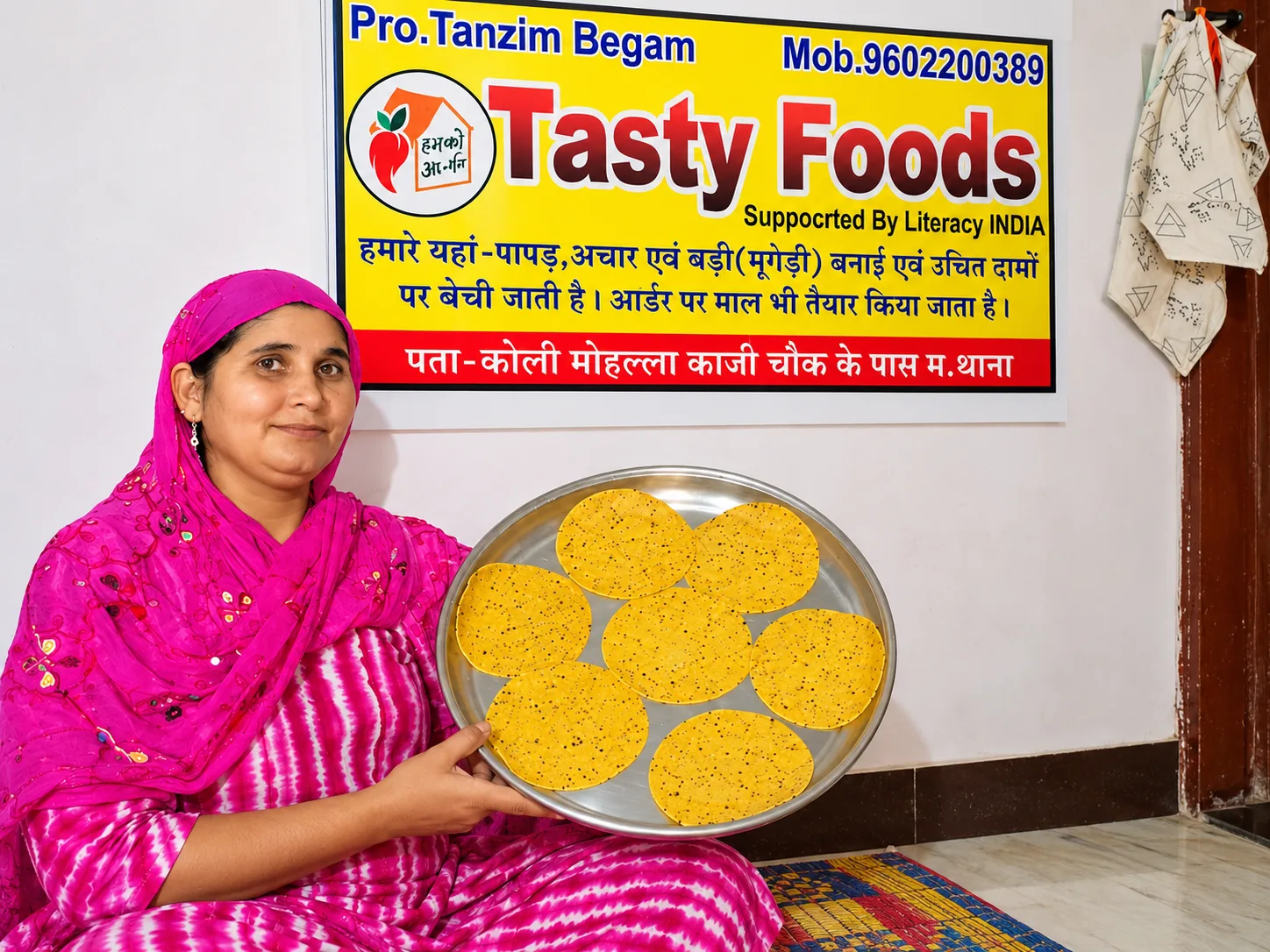
For Tanzim, learning to make papad and badi was not just about learning a traditional skill. It was about finding a way to contribute to her household without having to leave home to earn.
In Manoharthana, Rajasthan, Tanzim was looking for a way to bring in an income of her own.
At 33, she lives with her husband and two sons. Her husband works as a daily-wage labourer and is the family’s primary earner. Like many households that depend on daily wages, the family has to make its income stretch across its needs.
Tanzim wanted to help. But she needed an opportunity that would work alongside her responsibilities at home.The answer came through something familiar: traditional food.
Through Literacy India’s Papad and Badi Making Training Programme, Tanzim learnt practical skills in preparing papad and other traditional rural food products. The training gave her a starting point. A microloan from Literacy India then helped her take the next step.
She began making papad and other homemade delicacies from her home, initially selling within her local community.
It was a modest beginning, but it gave her a way to turn her skills into products that people could buy. Her earnings now help with household expenses and reduce some of the financial pressure on her husband.
There is another kind of progress here, too. Tanzim is beginning to build the experience that running a small business demands: producing consistently, finding customers and working towards regular sales.
Her enterprise is still developing. We do not yet have figures to tell us how much she earns or how quickly her customer base is growing. What we do know is that she has moved from wanting to contribute to taking practical steps towards doing so.
For women who cannot easily take up work outside the home, a livelihood that begins at home can offer a valuable starting point. But a start is only the beginning. Regular customers, steady earnings and the ability to sustain the business will determine how far it can grow.
Tanzim is at that first stage, learning as she goes.
There is no grand business launch here, no sudden transformation overnight. There is a woman, a skill she has learnt, some initial support and a decision to put them to use.
Sometimes, financial independence begins quietly — with the first product made, the first customer served and the determination to keep going.
At Literacy India, we believe that every individual has the potential to shape a better future when given the right opportunities, guidance and support. Sachi, Shantosh and Tanzim remind us that progress takes different forms — a first job, a business taking shape, or the confidence to earn from home. Each journey is different, but the aspiration is shared: to live with greater dignity, independence and choice. Through education, skills and livelihood opportunities, Literacy India continues to work towards a future where people are not defined by their circumstances, but by the possibilities they can create.